Description
What is
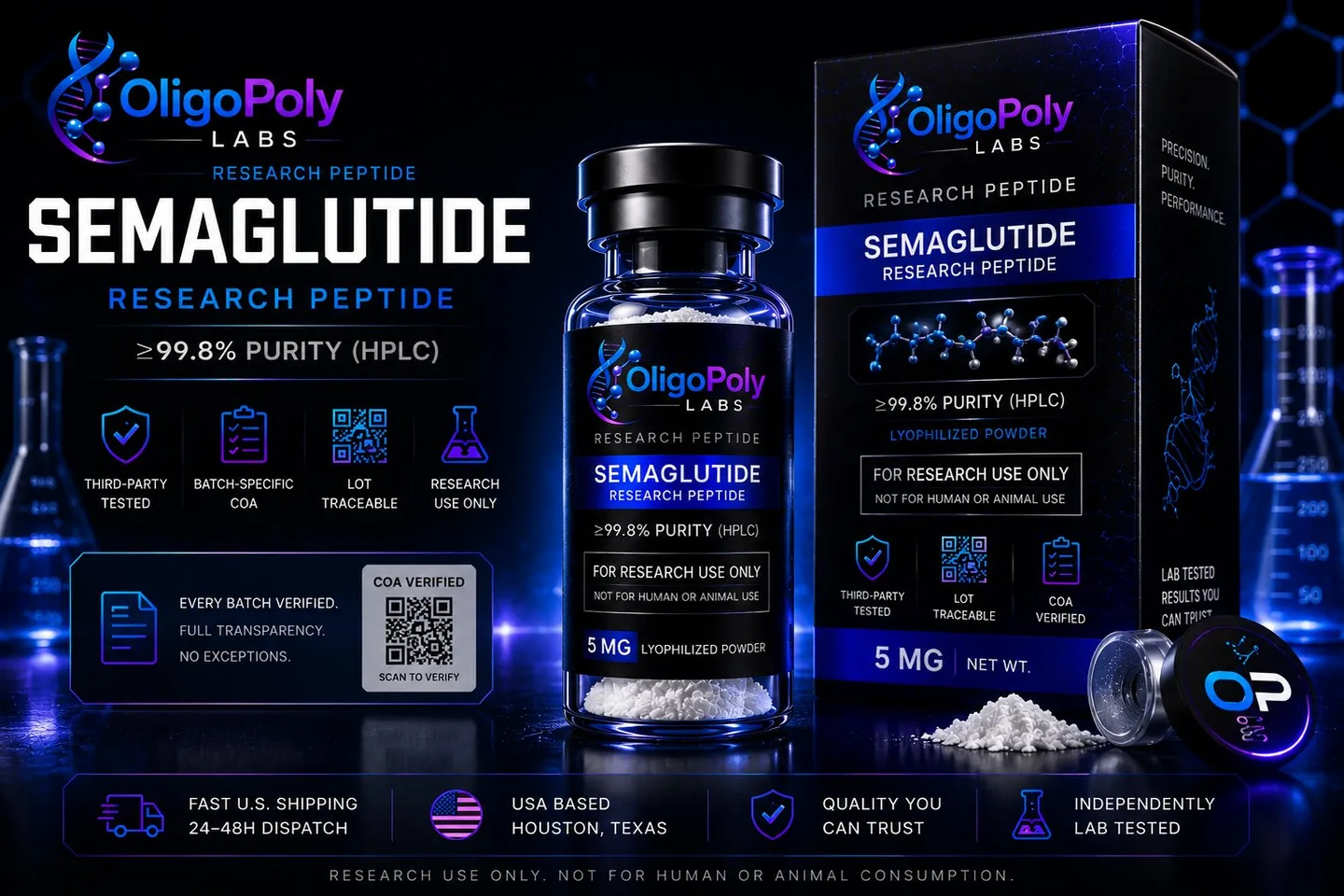
Semaglutide 10mg is a lyophilized research peptide supplied for laboratory research use only. It is commonly evaluated in GLP-1 receptor signaling and metabolic pathway research models, with emphasis on documented identity, batch traceability, and quality-control records rather than human-use marketing claims.
Researchers comparing peptide suppliers often look for clear testing language, product-specific documentation, and consistent internal records. This product page links to OligoPoly’s Certificate of Analysis information, Quality Standards, Research Peptides Guide, Peptide Storage & Handling Guide, and the broader Research Library so documentation can be reviewed in context.
Semaglutide Research Applications
Semaglutide is used in non-clinical research models where investigators study defined peptide pathways, analytical consistency, and batch-to-batch documentation. It should be handled only by qualified personnel under approved laboratory protocols.
- GLP-1 receptor activation and pathway mapping
- metabolic marker research in non-clinical models
- quality documentation review for GLP-1 peptide materials
The applications above describe research context only. They are not medical claims, treatment claims, dosing recommendations, or claims of suitability for use in people or animals.
Product Specifications
| Catalog Item | Semaglutide 10mg Research Peptide |
|---|---|
| SKU | OP-MET-SEMA-10MG |
| Research Category | Metabolic Research / Research Compounds |
| Format | Lyophilized research peptide vial |
| Price | $149 |
Quality Standards
OligoPoly Labs emphasizes batch-level quality documentation, traceable catalog data, and clear testing terminology. Applicable research peptides may be supported by HPLC purity review, LC-MS identity confirmation, lot records, and documentation checks before release.
Researchers should evaluate testing records as part of a complete procurement review. A strong review process looks at compound identity, purity reporting, batch number, testing method, date, and whether the documentation matches the vial or catalog item being evaluated.
Storage & Handling
Store research peptides according to product-specific documentation and laboratory protocols. The Peptide Storage & Handling Guide explains common considerations such as temperature control, light exposure, moisture exposure, reconstitution records, and handling logs.
Certificate of Analysis
A Certificate of Analysis helps researchers connect the product to batch-specific analytical records. COA review can support identity verification, purity documentation, traceability, and consistency checks before a material is used in laboratory research.
Research Use Only Disclaimer
Semaglutide 10mg Research Peptide is supplied for laboratory research use only. It is not intended for human consumption, veterinary use, diagnosis, treatment, prevention, or any clinical application. Researchers are responsible for reviewing all available documentation, following institutional procedures, and complying with applicable regulations.
Frequently Asked Questions
Is Semaglutide intended for research use only?
Yes. Semaglutide is supplied for laboratory research use only. It is not intended for human consumption or for medical, diagnostic, treatment, prescription, or supplement use.
Does OligoPoly provide COA or batch documentation?
OligoPoly Labs provides access to available COA verification, batch or lot documentation, and testing records when they are available for the specific batch. Documentation availability may vary by batch or supplier.
How should research compounds be stored?
Researchers should review the product label, COA, and storage and handling documentation before use. Storage requirements may vary by compound, batch, and laboratory protocol.
Where can researchers find reconstitution guidance?
Researchers can review the OligoPoly reconstitution guide and should align any preparation steps with laboratory protocols, COA information, and batch-specific handling documentation.
Is Semaglutide intended for human consumption?
No. Semaglutide is not intended for human consumption and is not for medical, diagnostic, treatment, prescription, or supplement use. It is supplied only for qualified laboratory research.
Semaglutide research documentation overview
Semaglutide is listed by OligoPoly Labs as a research-use-only compound for non-clinical GLP-1 pathway research models. This page is written for laboratory procurement review, documentation checks, and internal research planning.
Researchers should review available COA verification, batch or lot documentation, third-party testing information, and HPLC purity documentation before placing the compound into a laboratory workflow. Documentation availability may vary by batch or supplier, so batch-specific records should be checked before use.
This product is not intended for human consumption and is not for medical, diagnostic, treatment, prescription, or supplement use. It should be handled only by qualified research personnel under appropriate laboratory protocols.
Documentation and handling resources
- COA verification
- quality standards
- quality testing
- storage and handling guide
- reconstitution guide
- research library
- Research stacks
Related research reading
Research documentation
Research use FAQ
What documentation is available for Semaglutide 10mg Research Peptide | OligoPoly Labs?
Semaglutide 10mg Research Peptide | OligoPoly Labs includes research-use product information and should be reviewed alongside the certificate of analysis, quality standards, and batch documentation before laboratory use.
How should researchers review storage guidance for Semaglutide 10mg Research Peptide | OligoPoly Labs?
Researchers should review the product page together with the peptide storage guide for handling expectations, lyophilized material considerations, and documentation practices.
Where can the COA for Semaglutide 10mg Research Peptide | OligoPoly Labs be verified?
COA verification is available through the OligoPoly COA resource, which explains certificate review, identity documentation, and quality-control context.
Is Semaglutide 10mg Research Peptide | OligoPoly Labs intended for human use?
No. OligoPoly products are supplied for laboratory research use only and are not intended for human consumption, clinical use, veterinary use, or diagnostic use.
What quality standards apply to Semaglutide 10mg Research Peptide | OligoPoly Labs?
Researchers should review OligoPoly quality standards, purity documentation, and supporting research-library resources before adding any peptide to a laboratory workflow.
Satisfaction guarantee
OligoPoly Labs wants every research order to arrive accurate, intact, and aligned with the listed documentation. If something is wrong with your order, contact support so the issue can be reviewed under our return and refund policy.