
Research Comparison | Metabolic Peptides
Retatrutide vs Tirzepatide — Triple vs Dual Receptor Agonist Comparison
A comprehensive research-focused comparison of retatrutide (GLP-1/GIP/glucagon triple agonist, LY3437943) and tirzepatide (GLP-1/GIP dual agonist) — mechanism of action, receptor pharmacology, published clinical data, and sourcing considerations for laboratory research.
Overview: Retatrutide vs Tirzepatide
Retatrutide and tirzepatide represent two generations of incretin-based metabolic research peptides from the same developer (Eli Lilly). Both compounds act on GLP-1 and GIP receptors — but retatrutide adds a third receptor target (glucagon receptor, GCGR) that fundamentally changes its metabolic signaling profile. Understanding this distinction is essential for researchers designing multi-pathway metabolic studies.
Receptor Mechanism Comparison
| Receptor | Tirzepatide | Retatrutide | Function |
|---|---|---|---|
| GLP-1R | ✓ Agonist | ✓ Agonist | Insulin secretion, satiety, gastric emptying |
| GIPR | ✓ Agonist | ✓ Agonist | Insulin amplification, adipose tissue signaling |
| GCGR | ✗ Inactive | ✓ Agonist | Energy expenditure, hepatic glucose output, lipolysis |
| Fatty acid conjugation | C18 (albumin binding) | Fatty diacid moiety | Extended half-life for weekly dosing research |
GLP-1 Receptor Agonism — Shared Foundation
Both compounds activate the GLP-1 receptor (GLP-1R), the central target of the incretin drug class. GLP-1R activation stimulates glucose-dependent insulin secretion from pancreatic beta cells, suppresses glucagon secretion from alpha cells, slows gastric emptying, and produces satiety signaling through vagal afferents and hypothalamic circuits (particularly the arcuate nucleus). This shared pathway accounts for the metabolic overlap in their research profiles.
GIPR Agonism — First Differentiator from Semaglutide
GIP (glucose-dependent insulinotropic polypeptide) receptor agonism was the primary mechanistic innovation of tirzepatide over earlier GLP-1 monotherapy compounds like semaglutide. GIPR activation in adipose tissue and the central nervous system appears to amplify the metabolic effects of GLP-1R agonism in ways that are not fully characterized. Notably, GIP receptor agonism also appears to reduce the nausea associated with GLP-1 agonism, a counterintuitive effect documented in clinical trials.
GCGR Agonism — Retatrutide’s Key Differentiator
The glucagon receptor (GCGR) is what separates retatrutide from all other approved and investigational incretin compounds. Glucagon receptor activation increases hepatic glucose output and stimulates thermogenic energy expenditure. In isolation, GCGR agonism would raise blood glucose — the “anti-insulin” concern. But in the context of simultaneous GLP-1R and GIPR agonism, the insulinotropic effects of both incretin receptors counterbalance the glucagon-mediated glycemic effect while preserving the thermogenic and lipolytic downstream effects. This receptor balance is hypothesized to be the source of retatrutide’s superior weight loss efficacy in published Phase 2 data.
Published Clinical Data Comparison
Research context note: The clinical data below reflects published peer-reviewed trial results for informational and research reference purposes. These studies were conducted in clinical settings with human subjects under regulatory oversight. OligoPoly Labs supplies retatrutide and tirzepatide strictly as research-use-only compounds for laboratory investigation.
| Parameter | Tirzepatide | Retatrutide |
|---|---|---|
| Receptor targets | GLP-1R, GIPR | GLP-1R, GIPR, GCGR |
| Weight loss (highest dose, ~72wk) | ~22% | ~28.7% (68wk) |
| Absolute weight reduction (meta-analysis) | −11.82 kg | −16.34 kg |
| Development stage | Approved (FDA 2022/2023) | Phase 3 trials |
| GI tolerability | Better (GIPR effect) | More GI events noted |
| Liver fat reduction (Phase 2) | Significant | Up to 82% reduction |
Which to Use for Metabolic Research?
Research Peptides Available — Verified COA
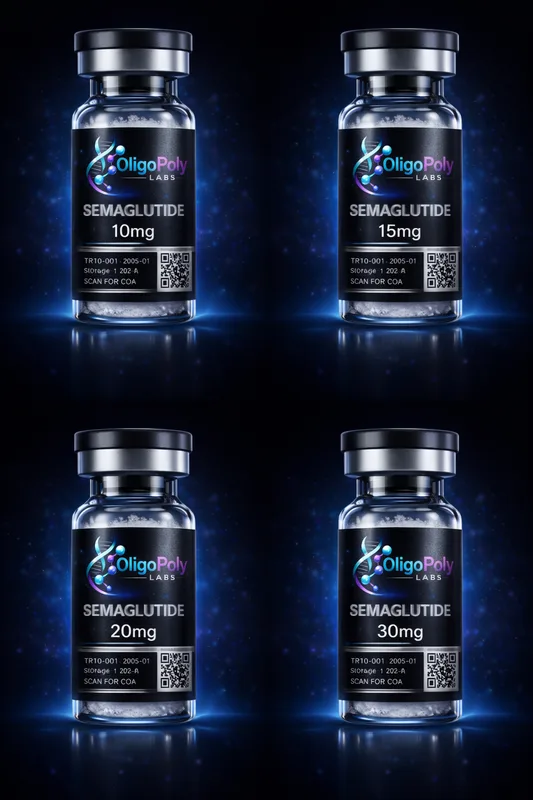
Both compounds are available from OligoPoly Labs as lyophilized research peptides, independently HPLC-verified at ≥99.8% purity with LC-MS identity confirmation and batch-specific COA documentation.


Related Research Comparisons
- Retatrutide vs Semaglutide — Triple agonist vs. GLP-1 monotherapy comparison
- Tirzepatide vs Semaglutide Research — Dual vs. single GLP-1R agonist comparison
- Single vs Dual Agonist Peptides — Framework for comparing incretin agonist generations
- Triple Agonist Peptide Guide — Complete guide to the triple agonist class
- GLP-1 Receptor Mechanism — Understanding GLP-1R pharmacology in depth
- Metabolic Peptide Comparison Hub — Full metabolic research peptide comparison index
Research Use Only: All compounds referenced on this page are strictly for laboratory and in vitro research purposes only. Not intended for human use, veterinary use, or diagnostic/treatment purposes. OligoPoly Labs sells research-grade peptides exclusively to qualified researchers.
Research Compounds Referenced in This Guide
For Research Use Only · Third-Party Tested · COA Verified · Ships from Houston TX